Emergency Roof Repair Bixby, OK
Professional emergency roof repair in Tulsa for hail, wind, and storm damage.
Tulsa Emergency Roof Repair Expertise
In Tulsa, OK, hail and wind damage happen fast. Storm-driven leaks don't wait. We provide emergency roof repair services in Tulsa to stop the damage and protect your home. From impact-damaged shingles to tarping and structural assessment, we handle urgent roof problems with clear communication and skilled craftsmanship.
How We Work
Emergency roof repairs in Tulsa require speed and accuracy. Our process focuses on protecting your home first, then assessing and repairing damage with attention to detail.
Call & Assess
We listen to your concern and answer immediate safety questions. If active leaks pose a risk, we schedule urgent assessment.
Site Inspection
Our team inspects shingles, flashing, valleys, and gutters. We document all visible damage and explain what we find.
Emergency Tarp or Repair
For active leaks, we install temporary tarping to stop water intrusion. For structural damage, we outline permanent repair steps.
Insurance Claim Support
We provide detailed damage documentation and photos for your insurer. We help walk through claim filing if you need guidance.
Permanent Repair
We replace damaged shingles, repair flashing, and reinforce weakened decking. Every repair meets local building code standards.
Final Walkthrough
We show you the completed work, verify repairs from the ground, and answer any questions about maintenance or future protection.
You'll always know what's happening next—and when.
Our Services
Storm damage in Tulsa comes in many forms. We repair the most common—and the most urgent—problems homeowners face after hail, wind, or rain events.
Hail Damage & Shingle Repair
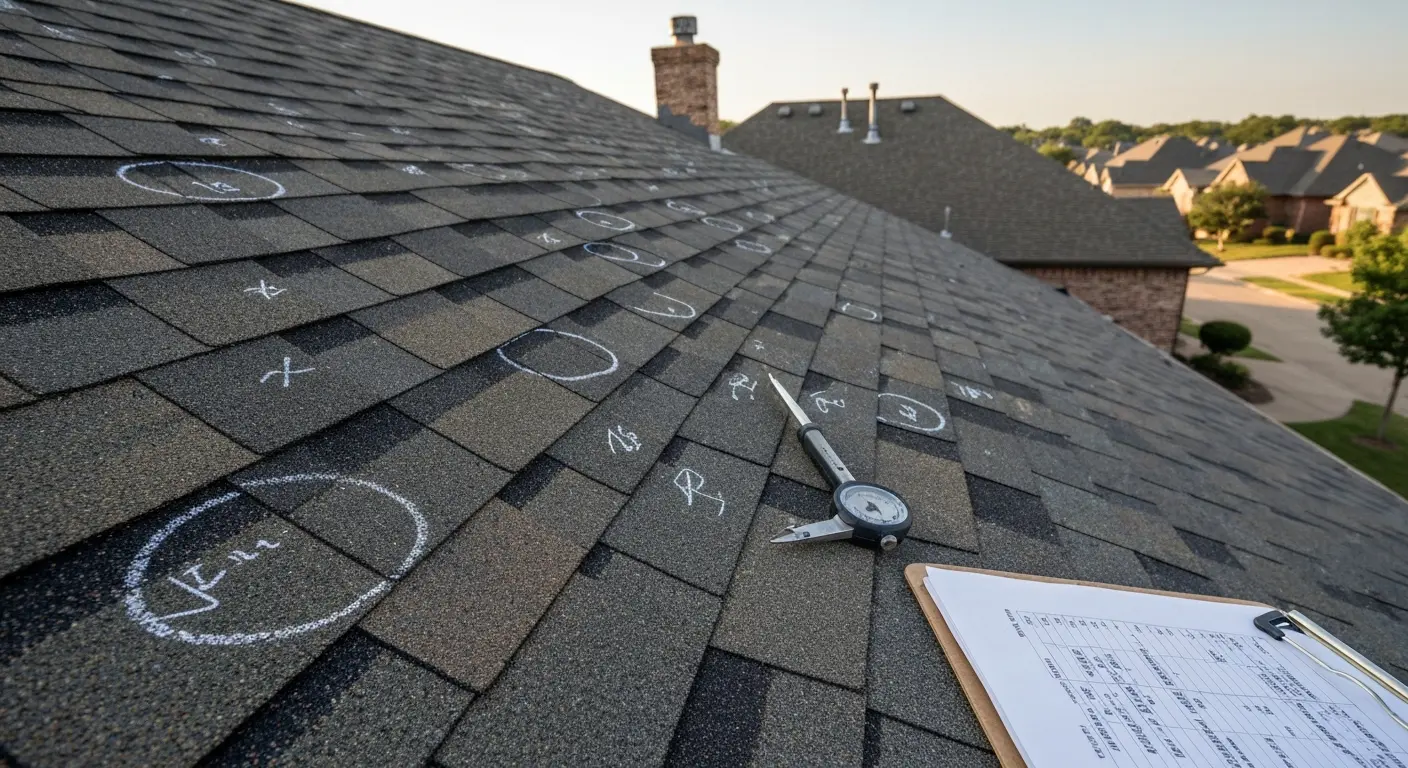
Professional hail damage inspection in Maple Ridge, Tulsa—catching early signs prevents costly leaks.
Hail the size of pebbles to baseballs strikes Tulsa regularly. Small dents bruise shingles and strip protective granules. Larger stones crack or shatter them.
Many homeowners don't notice the damage until leaks appear inside. By then, decking or insulation may be compromised. We inspect from the ground and roof to catch all damage early.
Visible dents mean hidden risk.
We document damage for insurance claims and recommend repair or replacement based on what we find.
Wind Damage & Shingle Displacement
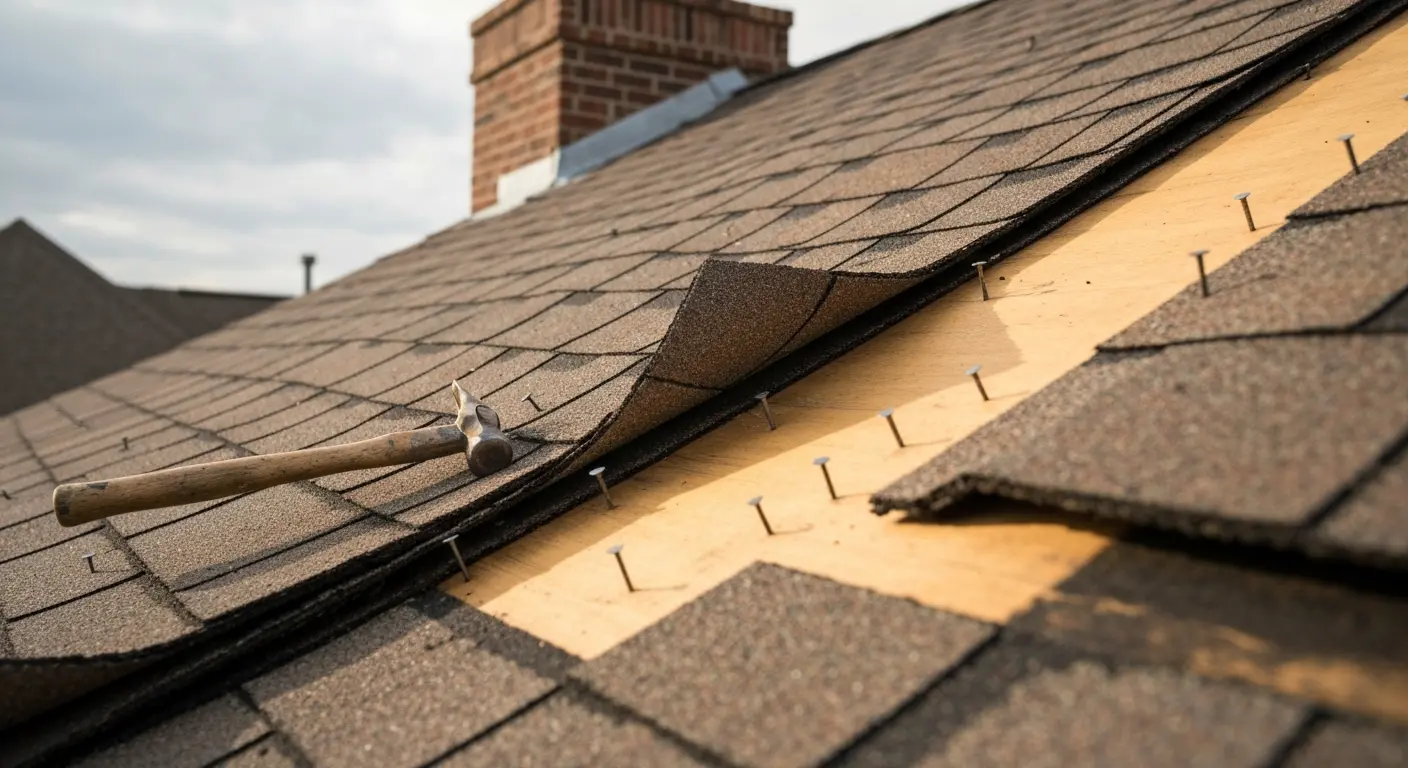
Lifted shingles from severe wind in Midtown Tulsa require professional re-fastening or replacement.
Tulsa storms produce microbursts—sudden downdrafts that lift shingles and expose vulnerable decking beneath. High winds can tear shingles along edges and ridges.
Once shingles lift, water seeps in during the next rainfall. Wind damage accelerates decay, especially in Tulsa's humid subtropical climate.
Edge and ridge damage is structural, not cosmetic.
We re-fasten loose shingles and replace torn sections. We also inspect flashing and roof edges, where pressure differences are strongest.
Emergency Tarping & Leak Control
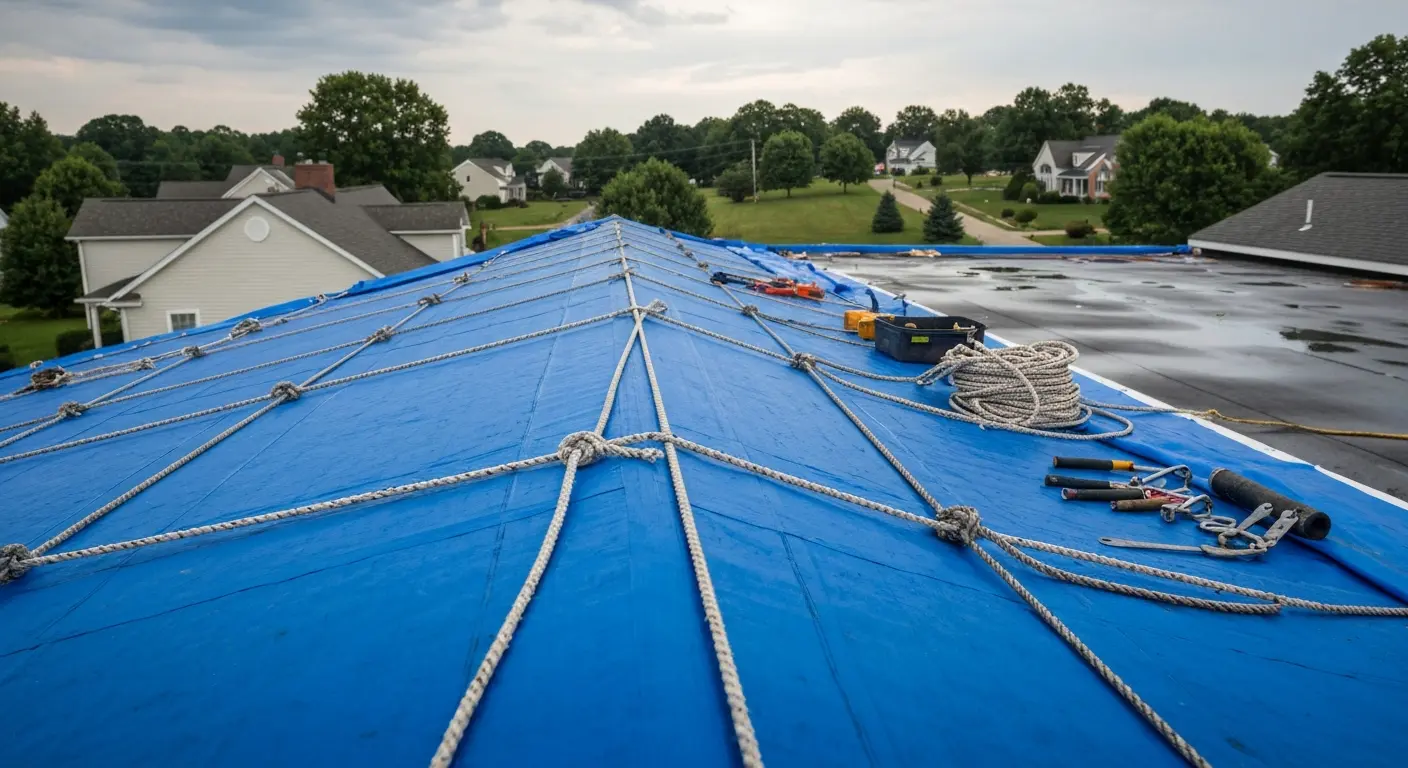
Rapid tarping prevents water intrusion after major storm damage in the Brookside area.
Active leaks require fast action. Even small holes allow water to travel deep into your home's structure. Attic humidity and mold grow quickly in Tulsa's warm, damp climate.
We arrive and secure the area with heavy-duty tarping. This buys time while you arrange permanent repairs and file insurance claims.
Hours matter—not days—when water enters your home.
Temporary tarping costs far less than replacing insulation, drywall, or treating mold damage later.
Flashing & Vent Repairs
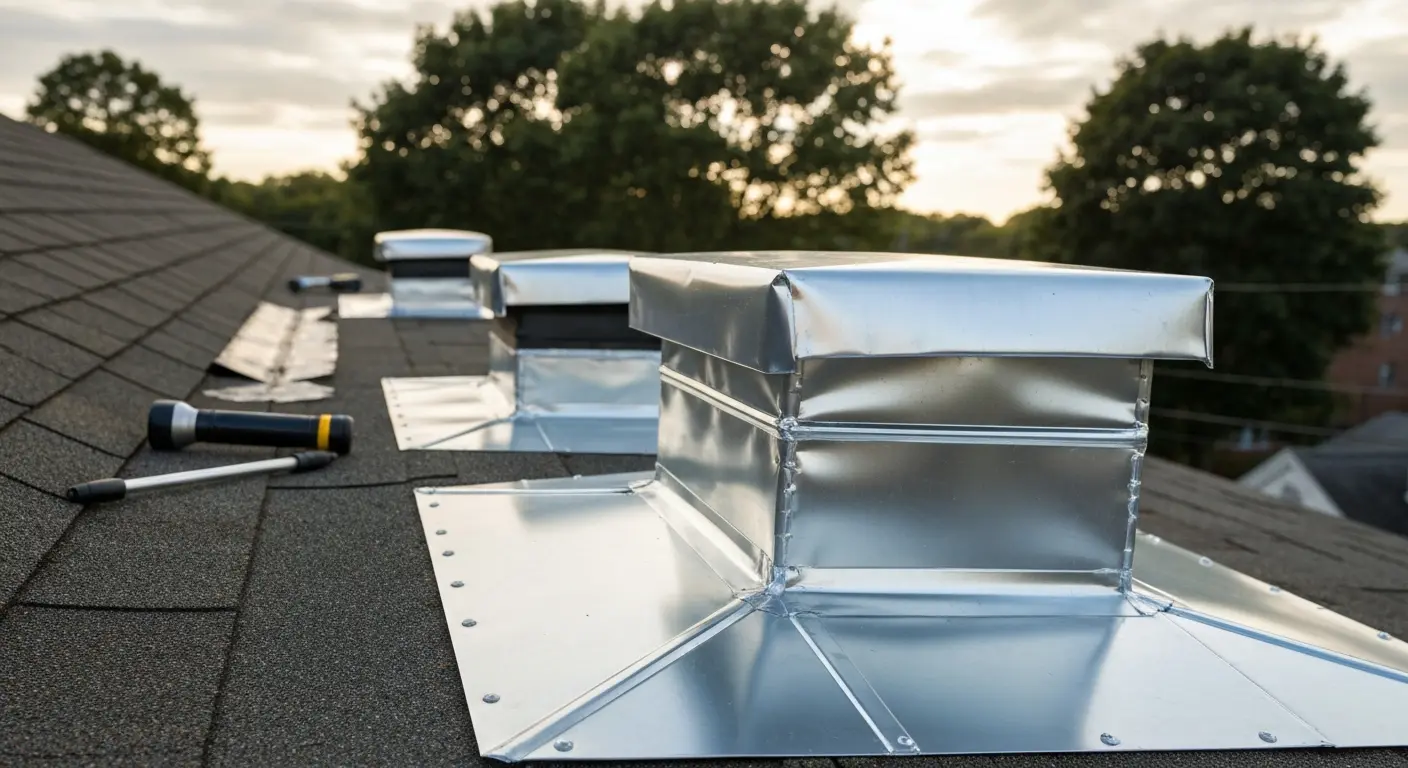
Dented flashing around chimney vents detected during post-storm inspection in Forest Hills.
Roof penetrations—chimneys, vents, skylights—are constant leak points. Hail dents metal flashing. Wind can crack sealant. Rain forces water down gaps.
We repair dented flashing, replace deteriorated sealant, and ensure all penetrations are watertight. This is preventive work that stops problems before they start.
Flashing is the roof's hidden guardian.
Small repairs now prevent major interior water damage later.
Debris Impact & Tree Damage
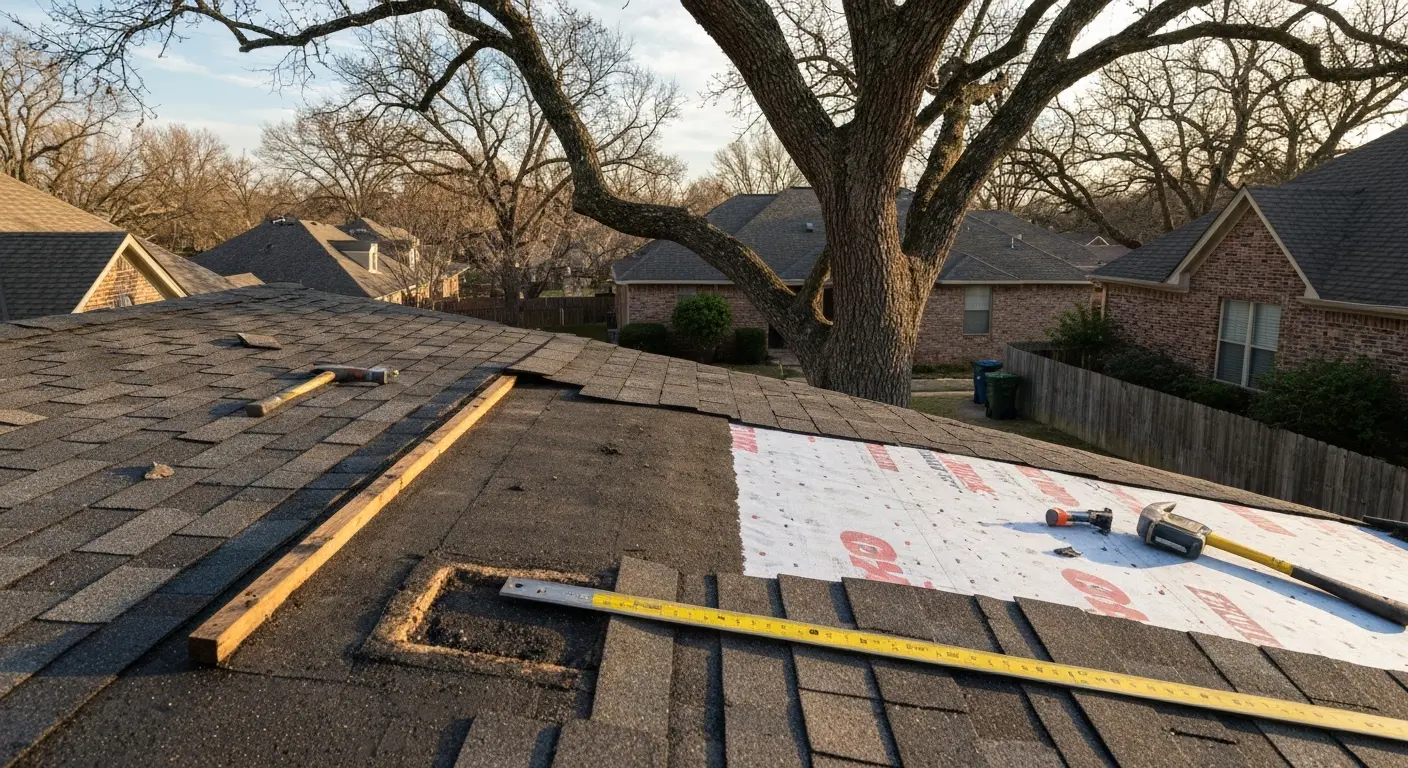
Oak tree branch punctured roof decking—common in mature neighborhoods like Yorktown, Tulsa.
Tulsa's mature oak canopies provide shade—but also branches. High winds break and drop limbs onto roofs, punching through shingles and decking.
Puncture holes allow water and weather inside immediately. We patch holes, reinforce decking if needed, and recommend preventive tree trimming.
Tree trimming saves your roof—and your wallet.
We assess storm damage and suggest maintenance steps to prevent repeat impact.
Why It Matters
Speed and expertise protect your home and your finances after a roof emergency in Tulsa.
Damage Spreads Without Immediate Action
In Tulsa's humidity, water doesn't just damage the roof. It travels into attic spaces, insulation, and wood framing. Mold and decay accelerate.
A leak ignored for weeks can cost three times what emergency repair costs. We respond fast to stop the spread.
Minor roof damage becomes major structural problems when water sits. The Tulsa climate accelerates decay.
Insurance Documentation is Critical
Many insurance companies require documented proof of damage from a licensed contractor. Photos and written assessments matter for claim approval.
Homeowners who call us early get professional reports that support their claims. Those who delay risk denial if damage is unclear later.
Professional documentation = faster claims.
We help you file correctly and reduce claim disputes.
Local Knowledge Prevents Costly Mistakes
Tulsa roofing is not one-size-fits-all. Building codes, permit requirements, and Tulsa County storm patterns vary by area and zip code.
Repairs done without local expertise fail. We understand Tulsa's weather, building regulations, and what materials hold up best in this climate.
Serving Tulsa and Surrounding Areas
We serve all of Tulsa, OK, including downtown, Midtown, Brookside, Maple Ridge, and surrounding neighborhoods. Storm damage doesn't respect city limits.
Tulsa Hail Alley & Weather Reality
Tulsa sits in 'Hail Alley.' We experience frequent storms with hail ranging from pea-sized to baseballs, plus high winds and heavy rain. These are not freak events—they're seasonal.
Every year, Tulsa homeowners file hail damage claims. We've repaired thousands of roofs in every neighborhood from Forest Hills to the Deco District and beyond.
Tulsa experiences 2–4 tornadoes annually and regular hail events that damage roofs. Emergency preparation is part of responsible homeownership.
Featured Snippet: Signs You Need Emergency Roof Repair in Tulsa
What roof damage in Tulsa requires immediate professional repair?
Look for soft spots or dents in shingles, missing granules in gutters, water stains on ceilings, lifted or creased shingles at roof edges, dents in metal flashing, missing shingles, or active leaks. Any visible damage after a storm should be inspected by a professional. Small issues escalate quickly in Tulsa's humid climate.
- Hail dents: Bruises on shingles that look minor still damage waterproofing.
- Lifted shingles: Wind lifts shingles away from decking, exposing layers underneath to rain.
- Water intrusion: Stains on ceilings or wet attic insulation mean damage has reached your home's structure.
- Granule loss: Missing granules in gutters mean shingles are failing and aging rapidly.
Frequently Asked Questions
Common questions about emergency roof repair in Tulsa, OK
What should I do immediately after a hailstorm in Tulsa?
Check your roof and gutters from the ground using binoculars. Look for missing shingles, dents, or debris. Take photos. Call a licensed roofing contractor for a professional assessment before filing an insurance claim. If you see active leaks inside, call immediately for emergency tarping.
Does homeowners insurance cover hail damage in Tulsa?
Most standard homeowners policies cover hail damage, but many Tulsa policies now include a separate Wind/Hail Deductible of 1–2% of your home's value. Comprehensive coverage and impact-resistant shingles may lower your deductible. Check your specific policy.
What's the difference between temporary tarping and permanent repair?
Temporary tarping stops water intrusion during active leaks while you file insurance claims. Permanent repair replaces damaged shingles, flashing, or decking with new materials that meet building code and offer lasting protection.
How do I know if my roof damage qualifies for an insurance claim in Tulsa?
A professional roof inspection provides the documentation insurance requires. We assess damage, photograph it, and create a detailed report. You use this report to file your claim. Most hail and wind damage qualifies—your policy deductible applies.
Can small hail damage worsen over time?
Yes. Hail dents damage the waterproof coating on shingles even if you don't see cracks. Subsequent storms, rain, and Tulsa's heat cause these weak spots to fail. Granule loss accelerates deterioration. Professional inspection catches damage early.
Are impact-resistant shingles worth the cost in Tulsa?
Class 4 impact-resistant shingles withstand 2-inch hail and winds up to 150 mph. Many Tulsa insurers offer 10–30% premium discounts. They last longer and reduce damage claims. In Hail Alley, they're a smart long-term investment.
DISCOVER WHAT OUR CUSTOMERS HAVE TO SAY ABOUT US
REVIEWS
proudly serving these areas
Bixby, OK
Broken Arrow, OK
Edmond, OK
Glenpool, OK
Jenks, OK
Okmulgee, OK
Oklahoma City, OK
Owasso, OK
READY TO take the next step?
get a free quote TODAY!
QUICK LINKS
our services
service areas
operating HOURS
Mon: 12:00 am - 11:59 pm
Tue: 12:00 am - 11:59 pm
Wed: 12:00 am - 11:59 pm
Thu: 12:00 am - 11:59 pm
Fri: 12:00 am - 11:59 pm
Sat: 12:00 am - 11:59 pm
Sun: 12:00 am - 11:59 pm